
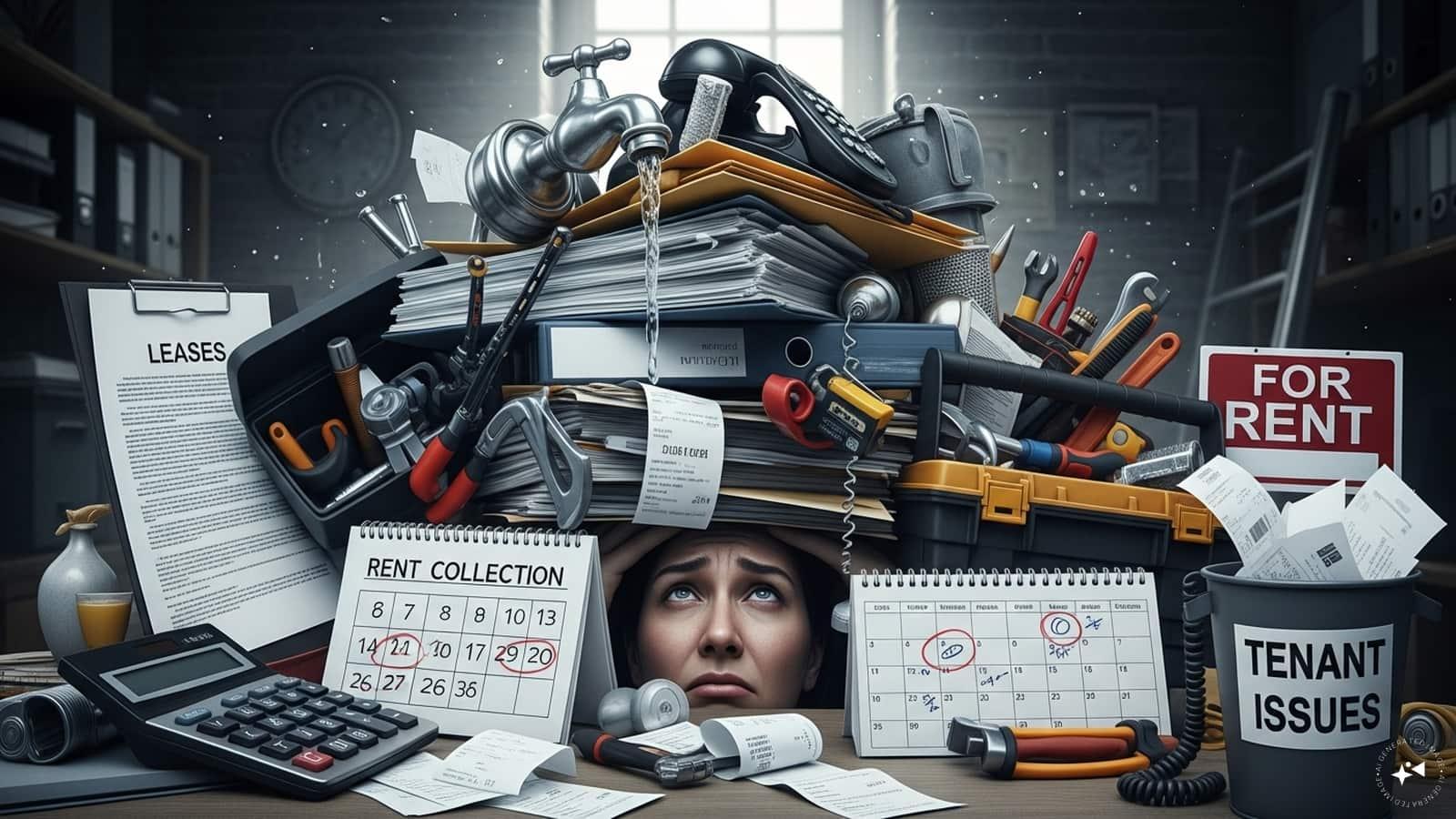
Should You Be a Landlord? The Question Every Rental Property Owner Should Ask Themselves
Owning a rental property can be a great way to build long-term wealth. It can provide cash flow, create equity, offer potential tax advantages, and give you control over an asset that may appreciate over time.
But there is an important distinction that often gets overlooked:
Do you want to own investment real estate—or do you actually want to be a landlord?
Those aren't necessarily the same thing.
Being a landlord comes with financial responsibilities, time commitments, difficult decisions, legal obligations, and sometimes an emotional investment that goes well beyond the property itself. Before deciding to rent out a home, it's worth taking an honest look at whether being a landlord fits your financial situation, personality, and goals.
1. Do You Have the Financial Security to Handle the Unexpected?
Rental income can make a property look like a simple equation: rent comes in, expenses go out, and what's left is profit. Real ownership rarely works that neatly.
A water heater fails. The HVAC system stops working in January. A roof needs attention. A tenant moves out unexpectedly. A property sits vacant longer than anticipated.
Some expenses may be relatively small. Others can run into thousands—or even tens of thousands—of dollars.
The important question isn't whether something will eventually go wrong. It's whether you're financially prepared when it does.
A rental property shouldn't be dependent on every month's rent arriving exactly on schedule to cover the mortgage and expenses. Owners should have adequate reserves and enough personal financial stability to absorb periods of vacancy and significant unexpected repairs.
If a $10,000 repair would create a financial crisis, owning a rental property may require more preparation before becoming a landlord.
2. Can You Afford the Property When It Isn't Producing Income?
One of the biggest misconceptions about rental property is that the tenant pays for everything. In reality, tenants pay rent. Owners are responsible for the property.
There may be periods when the property produces little or no income. Perhaps you're between tenants. Perhaps a unit requires significant repairs before it can be rented again. Perhaps you're dealing with a tenant who isn't paying.
During those periods, the mortgage, taxes, insurance, utilities, HOA dues, and other expenses don't necessarily stop.
Successful rental ownership requires the ability to weather those periods without making desperate financial decisions.
3. How Do You Feel About Large, Unexpected Expenses?
This is partly a financial question and partly a personality question.
Most homeowners don't enjoy receiving a $7,500 HVAC estimate. But when it's your rental property, you have to make the decision. Do you repair it? Replace it? Get another estimate? How quickly can it be done? What happens if the tenant is without heat or air conditioning while you're deciding?
Rental ownership means accepting that you don't always get to choose when you're going to spend money.
If unexpected expenses consistently cause significant stress or anxiety, it's worth considering whether direct ownership is the right investment strategy for you.
4. Can You Separate the Investment From the Emotion?
This may be one of the hardest parts of being a landlord.
Maybe it was your first home. Maybe you raised your children there. Maybe you spent years remodeling the kitchen, landscaping the yard, or turning the house into something you're proud of. That history can make it difficult to make objective decisions.
A rental property is ultimately an investment. But when you have an emotional attachment to it, decisions about rent, repairs, tenants, renovations, and even whether to sell can become personal.
- You may want to spend $20,000 renovating a kitchen because you would love it—even though the market may not support the additional rent.
- You may hesitate to replace something because you believe the property should be treated the way you treated it.
- Or you may become frustrated when a tenant doesn't care for the property exactly the way you would.
Emotional attachment isn't necessarily bad. But owners need to recognize when emotion is influencing an investment decision.
5. Are You Prepared for the Legal and Regulatory Side of Being a Landlord?
This is one of the areas that prospective landlords often underestimate.
Being a landlord isn't simply a matter of owning a property, finding a tenant, collecting rent, and fixing things when they break. Landlords operate in a legal and regulatory environment that can change over time.
Fair housing requirements, security deposit rules, required disclosures, notice requirements, habitability standards, screening practices, lease requirements, fees, eviction procedures, and other landlord-tenant regulations can all affect how a property must be operated.
And those rules aren't necessarily static. Laws and regulations change. Requirements that were acceptable when you purchased the property may not be the same several years later. A lease or process that worked previously may need to be updated.
This is particularly important because many individual landlords don't think of themselves as operating a business. They think of themselves as renting out a house. But from a legal and operational perspective, renting out property comes with responsibilities that shouldn't be ignored simply because you only own one property.
The things that get overlooked
Some of the biggest landlord problems don't come from a major decision. They come from seemingly minor things that an owner assumes aren't important:
- A security deposit isn't handled correctly.
- A required notice isn't provided.
- A fee is charged that isn't permitted.
- A tenant's request isn't properly documented.
- A screening process isn't applied consistently.
- A lease contains outdated language.
- A repair is delayed longer than it should be.
- A landlord communicates something informally that later becomes difficult to prove.
None of these situations necessarily seem significant when they happen. But they can become significant when a dispute arises. And ignorance of a requirement generally isn't a defense.
You don't have to become a lawyer—but you do have to take compliance seriously
This doesn't mean every landlord needs to become an expert in landlord-tenant law. It does mean that responsible owners need to understand their obligations, stay aware of changes that affect their property, maintain appropriate documentation, and seek qualified legal or professional advice when necessary.
The more properties you own, the more complicated this can become. But even a single rental property can create meaningful legal responsibilities.
If the thought of keeping up with changing requirements sounds exhausting, that is another legitimate consideration when deciding whether you actually want to be a landlord.
6. Are You Prepared to Manage the Vendors Working on Your Property?
One responsibility that is easy to overlook is the responsibility that comes with letting other people work on your property.
When a plumber, electrician, HVAC technician, handyman, landscaper, roofer, or other contractor enters your property, you're not simply hiring someone to complete a job. You're putting your property—and potentially your tenants and yourself—into a relationship with another business. That creates another layer of risk that many individual landlords don't think about.
What can go wrong
A landlord who carefully screens tenants but hires the first contractor they find on Google may be overlooking a significant source of risk. Consider:
- A contractor who is injured while working at the property.
- A contractor who accidentally causes significant damage.
- A contractor whose employee is injured while performing work.
- A contractor who doesn't properly complete work and leaves behind a condition that causes additional damage.
Insurance and proper documentation don't eliminate these risks, but they can be an important part of managing them.
Who are you actually hiring?
Before anyone starts work, ask:
- Are they properly licensed when a license is required?
- Do they carry adequate liability insurance?
- Do they have workers' compensation coverage?
- Are they a legitimate business?
- Are they properly registered and operating in compliance with applicable requirements?
Document the relationship
Just as importantly, are you documenting the relationship appropriately? At a minimum, landlords should consider keeping on file for each vendor:
- Proof of insurance
- Applicable licenses
- W-9 information
- Business information
- Appropriate contracts or agreements
Don't forget tax reporting
There is also an administrative side to vendor management that can easily be overlooked. Payments to contractors may create tax reporting obligations for the property owner. Proper vendor records, W-9 collection, payment tracking, and year-end reporting are all part of operating a rental property responsibly.
For an owner who manages everything personally, this can become another administrative task that gets pushed aside until tax season. And by then, finding missing vendor information can be much more difficult.
The cheapest bid isn't always the lowest cost
None of this means a landlord needs to personally become an expert in insurance, employment law, contractor licensing, or tax law. But it does mean that:
"I found someone who can do the job cheaply" isn't necessarily a sufficient vendor-management strategy.
The lowest bid may not be the lowest-cost option if the contractor isn't properly insured, doesn't perform quality work, or creates additional liability for the property owner.
Professional property management isn't simply about finding someone to fix a leaking faucet. A good management process should also include systems for vendor selection, documentation, insurance verification, payment controls, tax reporting, and ongoing vendor oversight.
For some landlords, this is an aspect of ownership they are perfectly comfortable managing themselves. For others, it's another reminder that owning a rental property and managing a rental property are two very different responsibilities.
7. Are You Comfortable Dealing With Tenants?
Being a landlord means dealing with people.
- Sometimes that means meeting a great tenant who pays on time, takes care of the property, and communicates well.
- Sometimes it means dealing with complaints at inconvenient times.
- Sometimes it means enforcing a lease provision that you would rather not enforce.
- And sometimes it means making an unpopular decision.
Landlords have to be able to communicate professionally, establish boundaries, document issues, follow applicable laws, and make decisions based on the lease and the facts—not simply on how they feel in the moment.
If you don't enjoy conflict, that doesn't automatically mean you shouldn't own rental property. But it may mean you should consider having someone else handle the landlord-tenant relationship.
8. Do You Have the Time?
Property management isn't just collecting rent.
There are maintenance requests, vendor coordination, inspections, turnovers, leasing, applications, screening, accounting, lease administration, compliance, communication, and all the little issues that inevitably arise with a property.
One property might not seem like much. But the question isn't how much work the property requires on an average Tuesday. It's whether you're prepared to deal with it when something goes wrong at the worst possible time.
A rental property can be a relatively passive investment—but only if the owner has built a system that makes it passive.
9. Can You Be Objective When Making Decisions?
Good landlords have to make decisions based on the economics of the property—not just what they personally want.
- Should you increase the rent?
- Should you replace an appliance or repair it?
- Should you renovate the property between tenants?
- Should you accept a slightly lower rent to get a stronger tenant?
- Should you keep the property at all?
These decisions become much easier when you can look at the property as an investment rather than as an extension of your personal home.
So, Should You Be a Landlord?
There isn't one right answer.
For some people, being a landlord is a great fit. They have adequate financial reserves, understand the risks, enjoy managing the property, and can make objective business decisions.
For others, owning rental real estate may still be a great investment—but being the landlord isn't. That's where professional property management can make sense.
Hiring a property manager doesn't eliminate the financial responsibilities of ownership. It doesn't eliminate repairs, vacancies, or the need to make major investment decisions. What it can do is separate ownership from day-to-day management.
You remain the owner and make the important financial decisions. A professional manager handles the operational side of the investment—helping manage leasing, tenant communication, maintenance coordination, rent collection, inspections, compliance, vendor management, and the many details that come with being a landlord.
The Better Question
Instead of asking, "Can I afford to own a rental property?" consider asking:
"Can I afford to be a landlord?"
And then ask yourself:
- Do I have adequate financial reserves?
- Can I handle a major unexpected expense?
- Can I comfortably carry the property through a vacancy?
- Can I separate my emotions from investment decisions?
- Am I comfortable dealing with tenants and conflict?
- Do I have the time to manage the property properly?
- Am I prepared to keep up with changing laws and regulations?
- Do I understand my legal and financial responsibilities?
- Am I prepared to properly screen and manage the vendors working on my property?
- Do I actually want to do all of this?
If the answer to some of those questions is no, that doesn't necessarily mean you should sell the property. It may simply mean that owning the investment and managing the investment should be two different jobs.
Real estate can be an excellent long-term investment. But successful ownership isn't just about buying the right property. It's about understanding what being a landlord really requires—and deciding whether it's the role you actually want to take on.